Feeds:
Posts
Comments

Building Depth

So I’ve been away from the blog for a bit, I’ll admit. Not a lot of people read it anyway, so it doesn’t matter all that much to me. The point of the blog is that it’s a place to put my writing…and if somebody happens to read it, so be it!

So after a move up island, I’m back and I’m taking things in a bit of a different direction. In order to further explore this fictional world I’ve got rattling around in my brain, I decided that I’d write a different short story every day (with breaks to talk about novel projects, post other story ideas, etc.). Seems like a fun way to develop a setting, I think…and you can let me know what YOU think, if you decide to actually take the time to read any of these! If not, that’s OK – one of the best pieces of advice I ever got about writing is that you have to write because you love it, not because you want somebody else to love what you’ve written.
So here’s the first piece:
Tauski’s Blade

The grip was oiled leather, criss-crossed over a wood handle. It felt warm and familiar in Tauski’s hand. The dark brown leather had been worn smooth by centuries of use; Tauski’s as well as his ancestors who had come before him, wielding the blade for the honour of the Zuko clan and the various kings they had served since the blade’s forging.

The lamplight swam before Tauski’s eyes. Too much rice beer, he suspected. Was it cowardly to become drunk the night before a battle? He didn’t think it really mattered. The evening before a conflict was a time for meditation, and one way or another he had achieved that frame of mind. Holding his family’s ancestral sword in hand, the sword that was his last remaining companion as the world he knew fell to pieces around him, there was nothing really left to do but think.

Tauski took another sip of beer. Setting down his cup, he drew his blade from the scabbard and watched the metal glow in the flickering of the lamplight. Forged by the legendary MaoChu-Ne, warrior-smith and later king of Nisho-Gau, the blade had been folded over hundreds of times in a method that had once been the envy of other nations. A sword from Nisho-Gau was worth ten ordinary blades, it had once been said.

Tauski ran his thumb along the blade, smiling as he drew blood. He watched the dark liquid pool on the pad of his thumb and drip onto the top of his sandal. His smile faded into a cold frown. Deadly ancestral blade or no, the world had left Nisho-Gau behind a long time ago, and Tauski with it. He re-sheathed the blade and set the sword across his lap.

This blade is your fate, his father had told him, and the fate of our entire clan. In a way, it is the fate of all the isles of Nisho-Gau, for we have been forsworn as protectors of the king for as long as that blade has been in our family’s possession. It is an honour to wield it, and a terrible burden.

“A terrible burden, indeed,” Tauski slurred. He had wanted the blade for as long as he could remember, probably before he could even talk. As the oldest child, it had been promised to him, and he had reminded his father at every opportunity. Yes, Tauski, it will be yours when I am gone, don’t you worry. Tauski remembered how guilty had felt, the first time he had fantasized about his father’s death so that he could call the sword his own. He would never forget the weight of the sword as it was handed to him over his father’s corpse. It had not become any lighter since.

Tauski stared out past the flickering light of his oil lamp, out the window and beyond the innumerable street lamps of the city to the murky harbour that lay beyond. Out there somewhere, ships were waiting. Waiting for a response from the king. Waiting to beat Nisho-Gau into submission should it refuse the Alliance’s demands. Waiting for ships from the Empire, to beat back the Alliance and claim Nisho-Gau for itself instead. Waiting for Tauski’s blade to taste its last sip of blood.

It would taste blood; Tauski had promised his ancestors that much. However, the outcome of the battle was all but certain: swords had no place at a modern firefight, Tauski had recently learned to his dismay. The Alliance’s ships held scores of soldiers in their bellies, each equipped with those strange long branches of wood that shot fire and metal instead of lead. Tauski had no doubt that an Alliance soldier in single combat was no match for a veteran warrior of Nisho-Gau, but he also knew that a sword was no match for barbarian magic. They would overwhelm him eventually.

Even if they somehow managed to defeat the Alliance’s ships in the harbour, it would only allow the Empire to the west the freedom to move in and strike the killing blow. Tauski pictured his archipelago nation as a bag of shiny stones being fought over by a pair of children. No matter what happened, one of the children would own the stones, the other would run away with a bloody nose, and the stones would be helpless. Their fate was sealed. The islands of Nisho-Gau, which had held their independence against the Empire for thousands of years, would finally fall to them in a world where honour meant nothing and swords were useless. Even worse, the islands were under threat of conquer by pale barbarian warlocks as well as the Empire.

A knock on his door brought Tauski out of his state of contemplation. There were only a handful of people who would be knocking on his door past midnight, and unless it was a messenger come to tell him they were to strike out in their small raiding ships early, he knew that he would not be pleased. He kept his sword in hand and strode quickly to the door.

It was General Tsho. The old man was bleary-eyed and his whiskers were askew, but Tauski still felt underdressed in his robe when the General boasted his full suit of armour, including a great horned helm that cast a rather impressive shadow on the street.

“General,” Tauski bowed. “I am prepared to do your bidding, whenever and whatever you may ask of me.”

“Stand up, Zuko,” the General said wearily. “You are to accompany me to the king’s palace.”

Tauski nodded. “I shall need to don my armour first.”

“No need. Follow me.”

Tauski followed Tsho down the street. Only their footsteps on the dusty road broke the silence of the city. Up the hill, Tauski could see lights burning brightly at the palace. “A summons, then? At this hour?”

“Every warrior in the city.”

Tauski stopped in his tracks. “What about the strike on the Alliance? Are we not still going ahead as planned? We must be going to the barracks afterward, surely.”

General Tsho sighed. Tauski had never seen him so tired. In the soft light of the streetlamps, the bags under his eyes were hollow and dark.

“Are you commonly in the habit of questioning your king, Zuko?”

“No.” Tauski regretted his outburst, blaming the rice beer.

The remainder of the walk to the palace was done in silence. Tauski began to wonder why the General himself had come to fetch him. Yes, he had served the king faithfully and with honour, but if every warrior in the city was being summoned to the palace, why had Tsho himself come for him, specifically? Something had happened; Tauski could feel it in his gut. His grip on his sword tightened.

The General led Tauski straight to the audience chamber. The great big space, normally empty, was full of warriors – any and all who had vowed upon the blade of their ancestors to protect the king. If it hadn’t been for the rising sense of tension in his gut, Tauski would have found it comical. There was HauRoShi the silent, rubbing his eyes and yawning, and old Ten-Ming who had fought with Tauski’s father at the battle of NomGau River was wearing the silliest nightcap. All the bladed warriors were present, those who had fought with and against Tauski during the Restoration. Every last man who had sworn his life to protect the king was present, save for the honour guard.

General Tsho watched more warriors trickle in, accompanied by messengers or soldiers. He leaned over to whisper in Tauski’s ear.

“I brought you here myself to make sure you didn’t do anything foolish. There’s been a change of plans. Just follow orders and you’ll live through this to a ripe old age like me. Or you can die young and stupid, Zuko, like your father did.”

As the General approached the dais in front of the throne, Tauski finally realized what was wrong. Where is the king? Is Tsho staging a coup? He’d have to be stupid to invite all the bladed here like this. If anything has happened to His Divinity, Tsho’s life is forefeit.

Flanking General Tsho on either side were his four lieutenants, but Tauski knew that there was no way they could best five hundred or so bladed warriors, even if most of them were practically naked. Treason against the king would have been a death sentence for the General.

Then the great big gold-painted doors at the rear of the audience chamber swung open, and Tauski realized the folly of following Tsho to the palace. The army began to stream into the room, bearing hand-cannons and swords at the hip. But the uniforms were wrong; it wasn’t Nisho-Gau soldiers entering the chamber, but men of the Imperial Army from across the Sunset Sea. The bright red emblems they bore over their shoulders were like a promise of bloodshed to come for the isles. Well these isles were forged from the blood and guts of the gods, so it’s only fitting their glorious history should end in blood, as well. How honourless of Tsho to trick us into coming here, thinking it was to defeat the Alliance when he had already sold us to our most ancient enemies.

Bladed warriors shuffled nervously as the soldiers filled up the great hall. Tauski’s hand never left his weapon. As the soldiers finished filing in, the golden wood doors creaked shut. It’s a deathtrap.

“My bladed brothers,” General Tsho began. Tauski spat at the words, and was glad to see he was not the only one who did so. Let the old bastard tremble before he butchers us like an honourless craven. “Today we usher in a new era of peace for Nisho-Gau. As we speak, the white barbarians are being driven from our shores. Soon Nisho-Gau will rejoin the world as a power to be reckoned with.”

“As a slave to the Empire, you mean,” somebody shouted. The soldiers against the walls shifted nervously but did nothing else.

“As a friend to the Empire,” Tsho stressed. “We have forged a brotherhood that-“

“Where is the king?” somebody else demanded. Tauski realized suddenly that those words had come from his own mouth.

“The king is indisposed at the moment,” Tsho replied. “But he has asked that you lay down your ancestral swords; they will no longer be needed. The cannon is the way of the future. Swear fealty to me as the new General of the Imperial State of Nisho-Gau and you will each be given officer’s ranks in the Imperial Army.”

The room was as silent as a temple graveyard. Tauski looked over to see that not a single bladed warrior had moved forward to swear fealty to Tsho. It was enough to bring a tear to his eye.

A collective gasp rose from the warriors as Tauski stepped forward.

“Have you come to swear fealty, Zuko Tauski?” General Tsho asked. A look of relief was on his face.

“No. I have come forward to tell you that if you repent for your cowardly deception, I will give you a quick death. However if the king is dead, you will not find any mercy in this life or the next…and I know that His Divinity would never whore out his nation to the godless Empire. Do you repent, Tsho?”

The General took a step backward, shielding himself behind his lieutenants. “Shoot them,” he muttered. Then, more loudly, “Shoot them!”

Tauski smiled. It was what he had been waiting for. His fate, tied in with the fate of his nation. Nisho-Gau would fall; it had not been a mighty nation for hundreds of years…but the honourable and the traitors would fall along with it, as pure as poetry.

Tauski drew his blade and rushed the dais as the cannons exploded about him and the room became awash in blood. His sword was no longer a burden…

It felt lighter than air.

Good evening! Last time I wrote out half of a short story and asked everybody to contribute a suggestion for an ending. Seeing as how I got one response, it looks like my job is pretty simple this week! Here is the second half of ‘The Right Thing’, as suggested by my cousin Scott.

Oh, please click here if you’d like to read the first half of the story!

The Right Thing, Part II

“Of course there’s something down there,” Brian said as he and Sara set the box down next to the chute. “They don’t take the garbage every day.”

“No, I mean…look down there. There’s blood.”

Brian shook his head, but couldn’t help peering into the chute. “Are you crazy? It’s too dark to see anything. Besides, meat department throws shit down there all the time.”

“But what if it’s a person?” Alethea demanded. “A body? Or somebody still alive? Shouldn’t we check?”

Brian laughed. “Go right ahead. I’m not going down there. It’s not a body, Alethea. Christ. Quit being such a paranoid idiot.”

“You don’t have to be so mean about it!” Alethea yelled. “Why don’t you shine your flashlight down there, if you’re so sure it’s nothing?”

Brian grunted. “Fine, if that’ll shut you up.” He leaned down into the chute and shined the flashlight at the bottom. Brian was surprised to find that the entire bottom of the compactor looked dark and slick, and there was something else down there…

“What the hell is that?” he wondered aloud.

“It looks like blood,” Sara replied with a gasp, “but it’s too dark to tell.”

Alethea crossed her arms. “I told you.”

Brian shook his head stubbornly. “It’s just some meat and other shit, I’m sure of it. Let’s just throw this box down there and get out of here.”

“Wait,” Alethea insisted. “Please, Brian.” She looked up at him with her doe eyes. Brian growled in his throat; it was the same look she’d used to make him hire her despite her lack of experience.

“Ugh, fine,” he said as he clambered into the chute. “I just know I’m going to regret this, somehow, but just for you I’ll go down there and then we’ll know for sure that it’s just a bunch of rotten meat. Keep your goddamn hands away from that button. Sara, could you keep a lookout?”

Brian watched Sara make her way to the back door and then he let himself slide down the wide metal chute. The bottom was nearly empty other than a few remnants of boxes and rotting vegetables at the back. The smell was enough to make him sick; he had to resist the urge to retch. Carefully, Brian shone his flashlight around the floor of the compactor. Sure enough, there was a trail of red leading from the base of the chute to the tightly packed garbage at the other end. Just some animal blood, he was sure of it.

“It doesn’t look like there’s anything here,” he called up the chute. “Wait…” Next to a large garbage bag, he spotted a kitchen knife on the floor of the compactor, covered in blood. Brian approached the other end of the compactor cautiously, cursing his curiosity for getting the better of him. He picked up the knife; it was slick with blood and bent at the tip. The smell of blood had grown stronger. Brian stared at the garbage bag and felt the pounding of his own blood in his ears.

“Well?” Alethea called down the chute.

“Just hang on,” Brian called back. He knew that it would have been smarter to leave well enough alone, but instead he winced and gave the garbage bag a tentative kick. It didn’t feel like a body or meat of any kind was inside, but the kick knocked the bag loose from the compressed garbage. It came loose from the wall of trash and landed at Brian’s feet. He stared at it for what felt like minutes.

The right thing to do was pretend that he’d never seen it, Brian knew. The right thing to do was leave it alone in the compactor, go back up the chute, throw the broken box of clothes in and leave, then donate the rest of them to charity. Instead, Brian found himself tearing open the plastic bag as he thought about the myth of Pandora’s box.

“Damn,” he gasped. “Shoulda left well enough alone.”

It wasn’t a body, but the bag was filled with bloody, crumpled clothes, including a pair of shoes. Brian rifled through the contents. White shirt, black slacks, black shoes, a nice blazer and a tie. There were two deep cuts in the fabric of the shirt, which was saturated with drying blood. Brian stared at the clothes and thought about his own fingerprints. He looked up at the wall of garbage and wondered if there really was a body somewhere amidst the filth.

“Brian,” Sara called from the chute. “Somebody’s coming. Get the hell up here.”

Brian hastily dropped the shirt and box cutter and clambered up the chute as quickly as he could manage. Sara and Alethea were staring at him; he realized that his hands were covered in blood. Before he could think of telling the girls to hide somewhere amidst the boxes, the back door swung open.

Brian was afraid that it was going to be a cop, but it turned out to be one of the night cleaning staff. The balding man got halfway into the warehouse before he looked up and noticed he wasn’t alone.

“Holy Jesus Christ!” the janitor screamed. “What the hell are you all doing here so late?”

“I could ask you the same thing,” Brian countered. He watched as the janitor eyed all three of them, as well as the box on the floor. Brian kept his hands strategically behind his back.

“I forgot something in the janitor’s closet earlier this evening,” the man said. His eyes darted between the three of them.

Sara frowned. “Why were you coming this way, then? Isn’t the janitor’s closet down the hall?”

“Oh!” the man exclaimed. “It is. I just, I…wanted to throw something in the compactor. I know I’m not supposed to, but…well, you know what? Never mind. I’ll just grab what I came from and go. Sorry to bother you all with…whatever it was you were doing here.” The janitor left hurriedly.

Brian waited for him to round the corner before he spoke. “Guys, let’s just take the box with us and get the hell out of here.”

“Did he freak you out that much?” Sara asked. “I think we spooked him just as badly. I’m sure he won’t tell anybody, Brian.”

Alethea touched Brian’s shoulder. “Wait. Was there anything down there, Brian?”

“You don’t want to know.” He hastily grabbed the box and began to walk to the back door. “Just…follow me.”

Sara and Alethea followed Brian out to the truck. Brian threw the box of clothes with the others in the back, and found himself staring at the janitor’s white panel van.

“What if he’s a serial killer?” Brian wondered out loud.

“What?” Sara and Alethea said simultaneously.

“I never should have gone down that chute,” Brian muttered. He looked down at the blood on his hands. For the first time, Sara and Alethea seemed to notice.

“Oh my god!” Alethea gasped. “What was down there?”

“Get in the truck,” Brian ordered. “I’ll tell you when we’re far away from here.”

***

Brian, Alethea and Sara sat in lawn chairs in Brian’s garage around a box of baby clothes. The other boxes had been stacked neatly in a corner amidst the junk that made Brian’s garage too full to fit his truck. Atop the box-cum-table was a bottle of whiskey, three glasses and a half-full ashtray.

Brian took a drag of his cigarette. “I still say we do nothing.”

“Nothing is not the right thing to do,” Sara insisted. “We saw something down there, and we have a responsibility to tell the authorities. Somebody was murdered, Brian.”

We saw nothing,” Brian replied. “I saw a bag of clothes and a knife, but at no point did I witness a murder or see a body. We don’t know that it was the janitor, which makes us possible suspects in the eyes of the police, as well. Not to mention the fact that we’d have to come clean about stealing from the company. Nothing is the right thing to do. We pretend it never happened…because if I hadn’t gone down that goddamn chute, we’d be blissfully ignorant about all of it right now.”

“We could always go in early and ‘find’ the clothes and knife,” Alethea suggested. “We don’t have to tell anybody about the baby clothes.”

Brian knocked back the last of the whiskey in his glass and heaved a sigh. “Alethea, look. They’ll do a full investigation and tear that compactor apart. Then Phil is gonna ask where the baby clothes went and we’ll all get fired when he finds out they’re not down the compactor. Here’s the bottom line: we were breaking the law…so we have no right to judge somebody else for doing the same. Besides, we don’t even know that it was the…”

“Oh, that’s fucking cold,” Sara said as she grabbed Brian’s pack of cigarettes and helped herself to one. “Stealing isn’t the same as murder, Brian. We have a responsibility. Don’t be such a fucking coward.”

“Coward? I didn’t see you volunteering to climb down the chute. And have fun finding a good job when you have a criminal conviction, Sara.”

Sara made a sour face but didn’t reply.

“So…that’s it, then?” Alethea inquired. “We’re just gonna do nothing about it, even if we know that somebody was murdered?”

“We don’t know anything,” Brian said. “There was no body. For all we know, it was a Halloween costume or a prank.”

“It’s June, Brian,” Sara snapped. “And a prank makes no sense in this situation.”

Brian poured some more whiskey into the three glasses. He hoped that at least Alethea would get drunk enough to sleep with him so he’d have something to help him forget all that had just happened.

“My point is that we’re not detectives. We don’t know what happened, and if we tell anybody about what we saw, it’s just going to make our lives miserable.”

“What about the person that…well, potentially died?” Alethea said. “Don’t they deserve justice? And the janitor! What if he kills again? What if he hunts us all down in order to keep it all a secret?”

“What about just pretending like nothing happened?” Brian suggested.

“It’s too late for that, Brian,” Sara replied. She pulled her cell phone out of her pocket and held it up for Brian and Alethea to see. “I can’t live with this on my conscience. I recorded this whole conversation and I’m going to go to the police and tell them everything.”

Brian rose to his feet so quickly that he kneed the box and knocked over the whiskey bottle. “What the fuck? Why would you do that?”

“Because it’s the right thing to do, Brian.” Sara made her way toward the garage door opener.

“The right thing to do?” Brian screamed at her. “We didn’t do anything wrong, other than stealing some clothes that were about to be thrown away…if you go to the police, we’ll all lose our jobs, and potentially worse!”

Sara stopped at the foot of the garage stairs. “Brian. Do you even understand what ‘the right thing’ means? It means doing something that’s better for the whole of humanity, even if you wind up putting yourself at risk. Every day people look the other way when somebody gets mugged, or pass by a car accident because they decide that they don’t have the time or that somebody else will stop and help. People refuse to donate to charities because they need their twenty dollars to survive more than a starving child does. People get away with abuse and murder because witnesses are afraid to stand up and become potential targets, themselves.”

“Wow,” Brian muttered. “Since when did you get so preachy?”

“Since we decided to steal those clothes, Brian. I was right beside you when Phil told you to throw them out, remember? You asked him why we couldn’t just donate them to charity, and he said ‘because it could cost us a lawsuit, that’s why’. It made me realize that at some point, people stop caring about others and start only protecting their own interests. Those clothes aren’t going to hurt anybody, but they have the potential to help…and I took a good, hard look at Phil and realized that if I stop caring about things like those baby clothes then I’m going to turn into somebody that I can’t stand to look at in the mirror.”

“So this is really about you, then, isn’t it?” Brian demanded.

“Brian.” Sara clenched her jaw; she looked like she was trying to phrase things without sounding angry. “What if you got killed and your body was discovered by some anonymous person? Would you want them to forget that they saw it and just move on with their life?”

Brian shrugged. “It wouldn’t matter to me; I’d be dead.”

“But your death would matter to somebody,” Alethea offered. She looked up at Brian with her doe eyes again and he groaned.

“Don’t look at me like that. Please. I like this job. I finally got a promotion. I don’t want to throw it all away because I saw something that might or might not have been a murder.”

“Then you’ll have to physically stop me, Brian, because I’ve made up my mind.” Sara pushed the button and the garage door began to rise with a loud hum.

Brian couldn’t bring himself to stop Sara from leaving. He wondered if there was a difference between a selfish person and a coward.

Remember those books? I loved them when I was a kid. This one was my favourite:

I even got into the role-playing inspired ones in my early teen years. Sure, they might not have a lot of literary value, but as a kid they were a lot more fun than pretending to be a Hardy Boy or a hobbit.

To segue, I decided to use this blog partially as a place to put my short fiction for the time being, just so that I can practice writing regularly (when I’m not working on novels, that is). I wrote a story today, but I found that once I got near the end, a dozen or so possibilities popped into my mind and I couldn’t decide on a definitive ending. Therefore, I would like to leave the ending of the story up to YOU, my (few but loyal) blog readers! I will write a reasonably short ending to the following story for each suggestion I receive, with a limit of one per person. If this turns out to be fun (and if at least one or two people show interest) I will probably do this more often.

Without further digression, here is the first part of the story:

“Doing the Right Thing”

“Brian, we’re going to get fired if they catch us,” Alethea whispered.

Brian ignored Alethea’s feeble protest and turned the key in the lock. “Come on Alethea, live a little.” He didn’t bother to lower his voice. With a gentle tap of his boot, the service entrance to Surplus Supplies lay open.

“I can’t believe they gave a key to you, of all people,” Sara said from behind Alethea. She and Alethea stepped into the stock room behind Brian.

Brian shrugged as he flicked on his flashlight. “You mean you can’t believe they made me manager. Remember, we can’t leave the stock room.”

Alethea crossed her arms and sighed. “Are you sure there aren’t any cameras back here?”

Brian wondered why Alethea had bothered to come if all she was going to do was complain. “I told you, I know where every camera in this store is.” He flashed his light around the room, quickly scanning the box labels. “Now make yourself useful and help me look for the stuff. Mark could have stacked them anywhere.”

Sara took out her own flashlight and began to look around. “Hopefully he didn’t stack the boxes way up high.”

“Relax; I brought the lifter key, too.”

Alethea sat on the floor as Sara and Brian looked around the vast stock room of Surplus Supplies. “You guys, I just realized something. If we get caught, we’re not just gonna get fired. We’re gonna go to jail.”

Sara flashed her light in Alethea’s face. “Did you forget why we’re doing this?”

“But it’s stealing,” she insisted.

“It’s not stealing if they’re just gonna throw the stuff out.”

“Guys!” Brian yelled from across the stock room.

“Shh!” the girls replied.

“I found them,” he said in a quieter voice as he crisscrossed his light on a group of boxes. They were stacked innocuously on the middle shelf. “Looks like we’ll need the lifter after all.”

“Just get the stool, Brian,” Sara suggested. “The lifter is noisy.”

“The boxes are heavy, Sara,” Brian replied. He tossed the lifter key at her. “Go get the lifter.” The key bounced off her chest and jingled as it skittered across the cement floor.

“Fuck you. Get it yourself,” Sara said. “Or quit being a pussy and climb up there like you used to when you were just a stock boy and not a lazy-ass manager who had to use the lifter for everything. It’s not like the stuff is fragile and we’re burning the boxes, remember? Just climb up and shove ‘em off the shelf and we can carry them out to the truck and go.”

Brian began to clamber up to the second shelf. “I’m not as spry as I used to be,” he muttered. “The lifter would have been easier.”

“The lifter would have taken twice as long,” Sara replied. “Start shoving.”
Off in the distance, permeating the silence and the walls of Surplus Supplies, a siren cried out in the night.

“Oh my god, you guys!” Alethea exclaimed. “What if they’re coming for us? We have to go, now!”

“Will you relax?” Brian demanded as he kicked a box bigger than his torso off the shelf. It landed on the concrete floor with a thud, denting one bottom corner. “There’s no way anybody else knows we’re here. Besides, that’s an ambulance siren, not the cops.”

“Actually, it’s a police siren,” Sara corrected. “Keep ‘em coming, Brian. I’m gonna start hauling ‘em out to the truck.” She turned to Alethea, who was still sitting on the floor. “Alethea, since you decided to come you can at least make yourself busy and help me carry these boxes out.”

“But Brian said they were heavy,” she whined.

Sara clenched her hands into fists and tried not to yell. “That’s why you’re going to help me carry them. Sometimes I wonder why Brian even hired you.”

“Mostly for her looks,” Brian called out as he kicked another box off the shelf.

“Speaking of getting fired…” Sara muttered as she lifted one of the boxes off the floor. “You know what? Never mind, Alethea, these are lighter than Brian made them out to be. You can just sit there and whine until we’re done if you like.” Sara left through the service entrance, hefting a box almost as big as she was.

“I wish you wouldn’t say things like that in front of others,” Alethea said as she traced a pattern with her finger on the floor. “People are going to think that I…didn’t get hired based on my abilities.”

“Well, you didn’t. Or did you forget your interview already?” Brian kicked the last box off the shelf and it burst open. Baby clothes spilled out of the box and scattered across the floor.

“Nice shot, Brian,” Sara said from the entryway. She walked up to one of the jumpers that had fallen out of the box and examined it. It was white and orange, and the words ‘Drama Princess’ were printed on the chest. “I still can’t believe they were gonna make us throw all these out just because they bore a resemblance to a popular brand.”

“Well, Surplus could get sued for selling them,” Brian replied as he began tossing the jumpers back in the box. “But it’s still too much of a waste. I mean, there are women’s shelters that could use these, you know, and people who can’t afford to buy their children proper clothes.”

“But it’s still stealing,” Alethea insisted as she picked up one of the jumpers and felt the material between her fingers.

Sara rolled her eyes. “Look, it’s not like we’re doing this for profit. We’re not stealing these so that we can sell them, or use them for our own benefit. If we don’t do this, the clothes will get destroyed in the compactor tomorrow morning. This way, they can go to help people in need, and Brian can come in early and claim that he already sent them through the compactor and nobody gets hurt. We’re doing the right thing, Alethea.”

Alethea chewed on a fingernail. “Well shouldn’t we throw something down there, just in case somebody checks?”

Brian and Sara exchanged glances.

“Hmm, maybe there’s more than just a pretty face underneath all that makeup,” Brian said with a smirk. “Let’s just throw this broken box of clothes down. It’s gonna be hard to give away this many boxes anyway. Help me out with this, Sara.”

As Sara and Brian threw the last of the scattered clothes in the box and lifted it, Alethea walked over to the garbage compactor and switched it on. Brian peered to the side of the box to see Alethea staring down the chute.

“Oh my god,” she gasped. “I think there’s something down there.”

Premises

We live in a world that demands an incredible amount of specialization from its blue-and-white-collar working classes. Gone are the renaissance men and women of our parents’ and grandparents’ generations, those talented individuals who knew how to build a house, survive outdoors for long periods of time with few supplies, fix a radio or a car, write a scathing letter to the editor without making any grammatical errors, etc. etc. I’m sure these people still exist, but their time is nearing an end. The collected knowledge base of humanity continues to increase, but most general knowledge is available at the speed of your smart phone. What is required from a middle-class citizen in the workplace now is specialization; that is to say, the ability to repeatedly perform a task that requires a great deal of training and specific knowledge. In the corporate world where very few are still self-employed, very few are required to know more than their own job…and sometimes the jobs of others, if they want to get promoted.

Just imagine how much you need to know to be a farmer, or a Navy SEAL. Sure, it takes a lot of brains and knowledge to be a computer programmer, for example, but none of a computer programmer’s skills have to do with human survival. We have built a comfortable world (at least, in this country) that takes care of our basic needs for us. We don’t have to know how to survive in the wilderness. We don’t have to catch our own food and often we don’t even prepare it ourselves. We don’t have to know how to light a fire; electricity and natural gas can keep us warm.

How much are we going to know about basic human survival a few generations down the road? Will a person in the future become so specialized at what they do, and so reliant on technology that they wouldn’t even know how to feed themselves without the assistance of machines?

What would happen to a person like that if they were thrust suddenly into a survival situation?

A cynic would argue that they would die pretty quickly…but I thought it would be more fun to find out what would happen if they had just a little bit of help…enough to help them cope, but perhaps not enough to adapt. That was the premise under which I started writing ‘The Zone’.

Two other ideas helped shape the story, and I have to give credit where it is due, because neither of the ideas are truly mine.

My friend Travis told me a while back about a great story idea that he would never use (this is paraphrased, of course): “Imagine a colonized planet,” he said, “with only a thin zone upon which people could survive, sort of a ‘twilight zone’. The daylight side of the planet would be too hot, the dark side too cold. The colonists crash-landed on the planet a long time ago, and because the planet rotates so slowly, it’ll take them years or even generations to get back to the ship that they had to abandon. Enough time passes that a religion of salvation develops around the concept of returning to their ship and leaving the hellish planet upon which they have unfortunately found themselves.”

I’m still working out all the science parts, but in a world where space-going vessels can cheat the logistical problems of light-years’ worth of distance, a planet that can hold an atmosphere and has both a hot and a cold side isn’t too far-fetched.

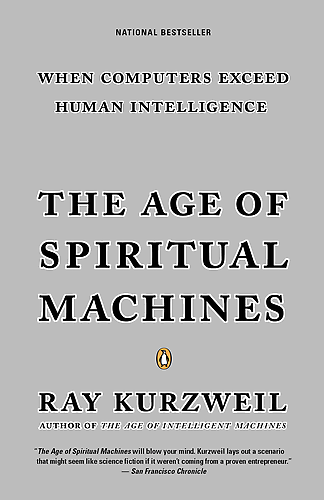
My third idea came from Ray Kurzweil, who wrote, among his other futurist books, ‘The Age of Spiritual Machines’.

Among his theories, Kurzweil presented some interesting notions about how humans would access information in the future. What if we could interact with a global network of people and information without the use of an external device? Yes, I know it’s an idea that’s been done before…but what happens when a person is suddenly deprived from that network, a thing that they rely on for all their information and even social interaction?

I’ve been thinking about making the title ‘Chasing Lucifer’. The name Lucifer is a nod to the dim, dismal but nevertheless life-giving sun of Arthur C. Clarke’s ‘2001’ series, as well as the obvious religious reference. Travis wanted me to call it ‘Chasing Twilight’, but I think I could get into trouble for using that word…

-James Funfer

Contests

Writing contests abound these days, either as offerings from publishers or the (nowadays) very popular National Novel Writing Month in November. Currently I’ve been keeping my eye on Angry Robot Books, a publishing company that seems to have fairly modern ideas. They’re offering to read unsolicited manuscripts in March, so I’m definitely gearing up for that. To get back to my thesis, these contests are really great, in my opinion, but not necessarily for the reason that you might think.

I used to look at NaNoWriMo as a one-shot, all-or-nothing deal. I knew that if I could write a story in a month and somehow get it noticed, everything would suddenly change for me and I would become an overnight success. Real life isn’t really so simple, but the trouble was that I built up the month to be such a huge deal that it became daunting, insurmountable.

Writing is a slow process, folks. It’s like becoming a professional athlete. It takes the brain some time to develop new skills, and even longer to perfect them. The body takes a long time to achieve the apogee of potential. Writing isn’t about pouring everything you’ve got into one story or idea.

Writing contests aren’t about creating something amazing in a short period of time. Anything worthwhile takes a lot of time, after all. The point that I’ve learned from two years of writing contests is that they require discipline. Regulated attention to writing, over time, yields results. It’s like practicing making ice sculptures in preparation for a big masterpiece, but you get to keep all of your attempts and mistakes and maybe use some of them. Maybe that’s a really awkward analogy, but I guess that’s one of the things I’m still working on as a writer.

I’m doing Key Publications’ writing contest again this year and even though I’m really behind, it’s reminding me that writing is, in essence, a discipline. People gripe about how popular Stephenie Meyer’s books are, but the fact is that she writes. The point of having to write 2000 words a day is so that you can discipline yourself to do so regularly, even when you don’t feel like it. I can’t even cite the number of published authors who will tell you that if you want to be successful, you can’t just write when inspirations strikes. You have to do it regularly.

The point I’m trying to make is that writing contests aren’t the end-all and be-all. They’re just another tool for developing the craft. Whether you get noticed or not, the success achieved is through the effort put in and the skills accrued.

« Newer Posts